Low Sodium Soy Sauce: Is It Actually Healthier, and How Does It Compare to Light Soy Sauce?
Soy sauce delivers concentrated umami, but labels such as "low sodium," "reduced sodium," "less salt," and "light" can make shopping confusing. Is light soy sauce actually lower in sodium, and is low sodium soy sauce better for you? This guide explains what each term means, compares low sodium soy sauce vs light soy sauce, and suggests practical substitutes for reducing salt without losing too much flavor.
Low Sodium Soy Sauce vs Light Soy Sauce vs Reduced Sodium Soy Sauce: What Is the Difference?
These three types of soy sauce differ in what their names describe, how their sodium content is assessed, and how they are used in cooking. The low-sodium type is defined by an absolute sodium limit, the reduced-sodium type is compared with a reference product, and light soy sauce is a Chinese culinary style based mainly on color and function.
Here is a quick snapshot of their sodium meaning and common uses:
A common question from our readers is, "Is low sodium soy sauce just light soy sauce?" No. "Light" describes the sauce's appearance and culinary role, not a guaranteed reduction in sodium.
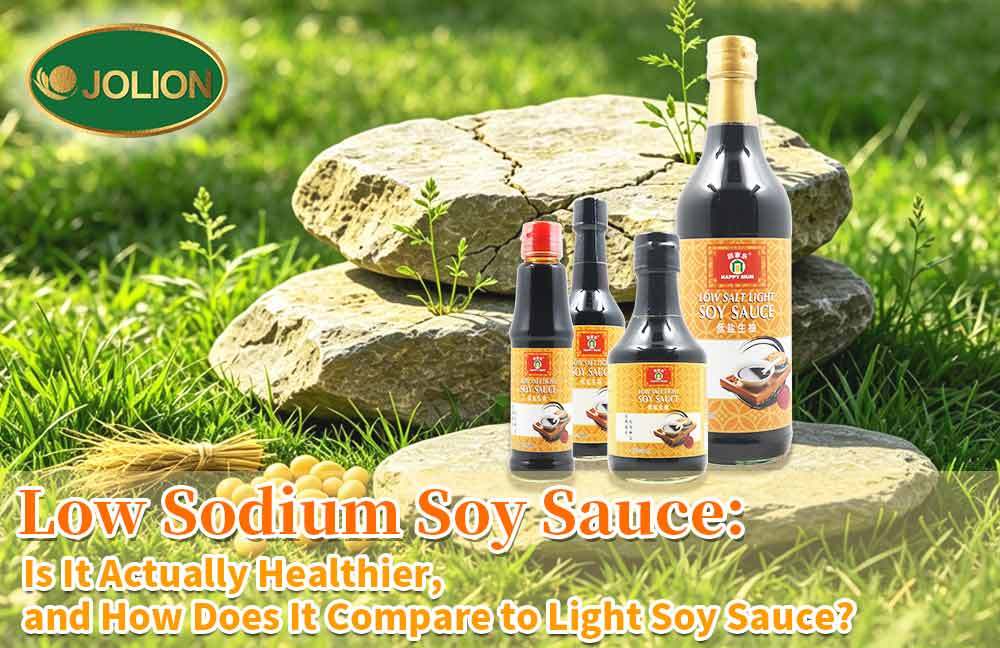
Our own range shows why the distinction matters. JOLION Foods's low-salt soy sauce contains 21% less salt than conventional soy sauce, while our light soy sauce is defined mainly by its reddish-brown color and everyday seasoning use.
Note: These descriptions serve different purposes, so readers should still check the nutrition label and applicable local labeling rules when comparing sodium content.
However, terminology alone does not determine whether one option is healthier. The actual sodium per serving, the amount used, and the rest of the meal all matter. This is the health question we will examine next.
Is Low Sodium Soy Sauce Better for You?
Yes—a lower-sodium formula can be a better choice when it replaces regular soy sauce in the same amount because it reduces the sodium contributed by the condiment. However, it is not sodium-free, so the benefit still depends on portion size and the rest of the meal.
That distinction matters when the numbers are put into context. The World Health Organization recommends that adults consume less than 2,000 mg of sodium per day. The American Heart Association notes that one tablespoon of soy sauce can provide more than half of its ideal daily limit of 1,500 mg, and reduced-sodium versions may still be fairly high. Measuring the sauce rather than pouring it freely can therefore make a noticeable difference.
These figures usually lead to two follow-up questions.
Can You Have Soy Sauce on a Low-Salt Diet?
Yes—if it fits within your total daily sodium target. Choose the option with the least sodium by comparing equal serving sizes, measure the amount used, and reduce other salty ingredients in the same dish. Anyone following a medically prescribed sodium limit should follow the advice of their healthcare professional.
Is Low Sodium Soy Sauce Bad for You?
No—not for most people when used in a reasonable portion. It can still be a concentrated source of sodium, however, so check the nutrition label. If even a small serving does not suit the recipe or dietary goal, the next step is to find a suitable low sodium soy sauce substitute.
How to Find the Best Low Sodium Soy Sauce Substitute
If even a small serving of soy sauce adds too much sodium, choose a substitute based on what the recipe needs most—umami, saltiness, color, or a soy-free formula. This is especially helpful for anyone looking for a heart-healthy substitute for soy sauce.
l Homemade savory blend: The American Heart Association suggests combining low-sodium broth with vinegar, a little molasses or brown sugar, ginger, garlic, and pepper. It works well in soups, marinades, and mixed sauces.
l Coconut aminos: This soy-free option has a milder, slightly sweeter taste. Compare labels because sodium levels vary by product.
l Low-sodium tamari: It provides fermented umami, although its flavor may differ from Chinese light soy sauce. Always check the sodium per serving.
l Lower-salt soy sauce: This is often the closest match when you want less salt without losing the familiar fermented flavor. JOLION Foods's naturally brewed low-salt soy sauce offers this middle ground, with 21% less salt than conventional soy sauce.
Avoid a full substitution when soy sauce is a primary flavor driver, as non-soy alternatives may change the dish noticeably. In these cases, a measured amount of lower-salt soy sauce is usually a closer match.
Once you know whether you need a true substitute or simply a lower-salt formula, the next step is to compare labels and identify which option actually contains the least sodium.
Which Soy Sauce Has the Lowest Sodium? A Label-First Buyer's Guide
The option with the lowest sodium is the product showing the fewest milligrams for the same serving size—not automatically one particular soy sauce category.
As a starting point, shoppers often compare coconut aminos, low-sodium tamari, lower-sodium soy sauce, regular light soy sauce, and regular dark soy sauce in that order. However, recipes vary, so a nutrition label may reverse part of this ranking. Use the following checks before deciding:
l Compare equal servings: One teaspoon cannot be compared directly with one tablespoon.
l Read the sodium value: Check both milligrams and % Daily Value rather than relying on "light" or "lite."
l Check the reference claim: A "reduced" or "less sodium" label should identify the comparison product and reduction.
l Review ingredients and allergens: Look for soy, wheat, sweeteners, preservatives, hydrolyzed protein, or potassium-based salt replacers as relevant.
l Separate claims from certifications: "Non-GMO," "no artificial preservatives," and "naturally brewed" describe sourcing or processing unless supported by recognized verification. Naturally brewed sauces develop flavor through fermentation, while acid-hydrolyzed products use a faster process and can taste different.
JOLION Foods — Naturally Brewed Less-Salt and Light Soy Sauce Options
For readers who prefer fermented soy sauce rather than a non-soy substitute, JOLION Foods offers a less-salt formula and a traditional light soy sauce for different flavor, cooking, and packaging needs.
Note: "21% less salt" is JOLION Foods' stated comparison with conventional soy sauce. It should not be interpreted as confirmation that the product meets a market-specific "low sodium" or "reduced sodium" definition. Buyers should verify the current sodium specification and local labeling requirements for the destination market.
These packaging options support household use as well as retail, catering, distribution, and food manufacturing. Buyers can select smaller bottles for store shelves or larger formats for commercial kitchens and food production.
For businesses developing their own product lines, our private-label sauce service supports custom flavors, specifications, labels, and packaging for different markets. Contact us to discuss the soy sauce type, formulation, and format that best fit your needs.
Related News
- Aug 06, 2026Low Sodium Soy Sauce: Is It Actually Healthier, and How Does It Compare to Light Soy Sauce?
- Aug 06, 2026Is MSG Bad for You? The Science-Backed Truth About Monosodium Glutamate Side Effects
- Jun 01, 2026How Long Does Canned Pineapple Last: A Complete Guide
- Jun 01, 2026How Long Does Canned Fruit Last? A Complete Guide
- May 20, 2026Choosing a Trusted Japan Wasabi Sauce Manufacturer in China for Authentic Flavor
- May 19, 2026Why Our Supply Chain Trusts This Gluten Free Soy Sauce Manufacturer in China
Start Your Seasoning Sauce Business by a Free Quote
GET FREE QUOTES
If you are interested in our services, let's have a try on the first project