How to Start a Sauce Business in 7 Steps
The global sauce, dressing, and condiment market is projected to continue its robust growth, fueled by increasing consumer interest in gourmet, ethnic, and health-conscious options.
From fiery chili sauces to savory pasta bases and classic condiments, there are many ways to start your sauce business, as consumers continue to look for bold and unique flavors to enhance their meals.
Careful planning and unwavering quality are key to success in the food industry. Here, JOLION Foods will offer you a clear and comprehensive guide to how to start a sauce business in 7 steps!
How to Start a Sauce Business in 7 Steps
Launching a food product requires a systematic approach. Follow these seven steps to transform your sauce business ideas into a profitable venture.
1. Research and Planning
Every successful business begins with thorough preparation.
Market Analysis: Define your target audience. Are you catering to home cooks, restaurants, or specialty food stores? Analyze existing competitors. What gaps can your unique flavor profile fill?
Business Plan: Create a detailed document covering your business structure, operational model, three-year financial projections (including startup costs and projected sales), and a risk assessment.
Unique Selling Proposition (USP): What makes your sauce stand out? Is it a secret ingredient, a commitment to organic sourcing, or an innovative flavor combination? This will be central to your branding.
2. Legal and Regulatory Considerations
Compliance is crucial in the food industry to ensure safety and legality.
Business Registration: Register your business entity (LLC, sole proprietorship, etc.) and obtain the necessary tax IDs.
Food Safety: Get familiar with your local, state, and federal food safety regulations. This includes understanding Hazard Analysis and Critical Control Points (HACCP) principles.
Licensing and Permits: You will need specific food handling permits and kitchen licenses to produce and sell your sauce legally.
Labeling: Ensure your labels comply with government regulations, including accurate ingredient lists, nutritional facts, allergen warnings, and weight/volume declarations.
3. Developing Your Sauce Recipe
Your sauce is your product's heart.
Recipe Standardization: Scale your unique recipe to commercial volumes while maintaining consistency in flavor, texture, and color. This is harder than it sounds and critical for bulk sauce manufacturers.
Shelf Stability (pH/Water Activity): For commercial viability, your sauce must be shelf-stable. This involves testing and possibly adjusting the pH level and water activity (aw) to prevent microbial growth. Many sauces require a pH below 4.6.
Ingredient Sourcing: Secure reliable suppliers for high-quality, consistent ingredients in the volumes you will need.
4. Setting Up Production
Deciding where and how your sauce is made is a major business decision.
Commercial Kitchen: You must produce your sauce in a commercial, licensed, and inspected facility. Options include renting time at a commissary kitchen or building/leasing your own plant.
Co-Packing/Private Labeling: For many startups, partnering with sauce manufacturing companies (co-packers) is the most viable path. They handle the production, bottling, and scaling, saving you massive initial capital investment in equipment.
Quality Control: Establish strict quality assurance protocols at every stage of production, from raw material inspection to final packaging.
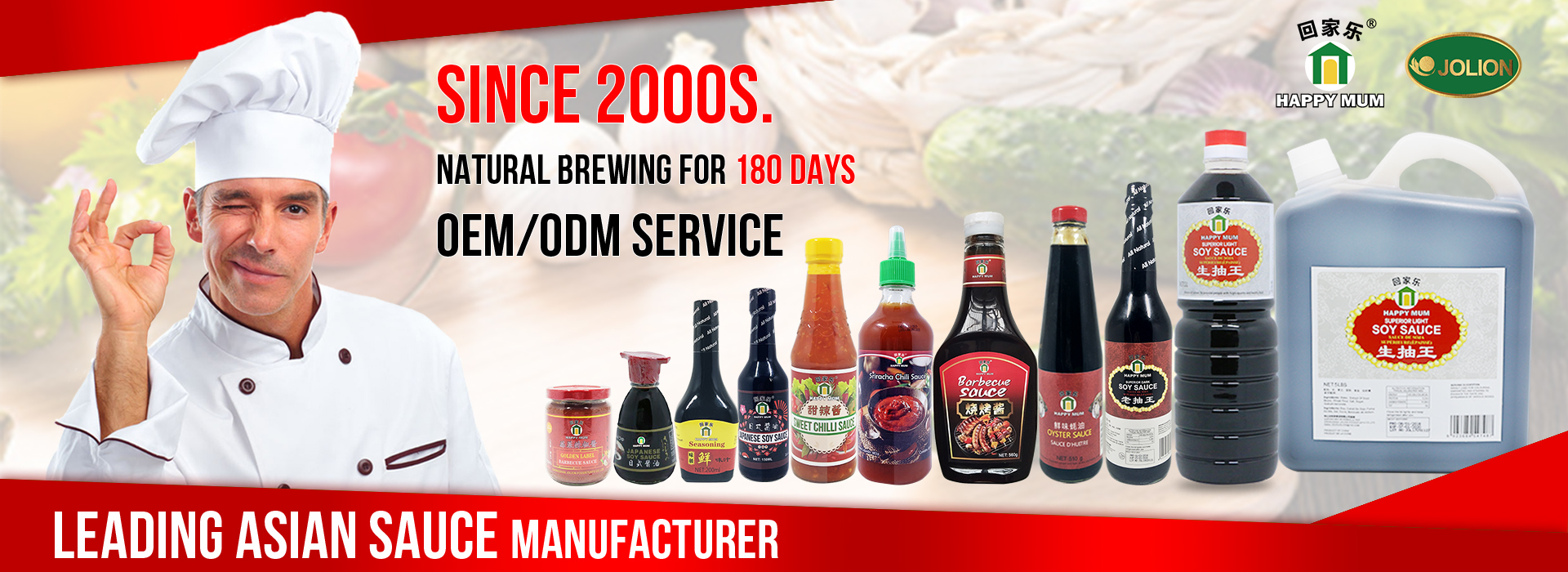
JOLION Foods is here to offer professional sauce OEM & ODM services.
5. Branding and Marketing
A great product needs a great story and presentation.
Brand Identity: Develop a compelling brand name, logo, and overall aesthetic that communicates your USP and resonates with your target market.
Packaging Design: Choose attractive, functional, and durable bottles or containers. The label is your primary marketing tool on the shelf—it must stand out.
Digital Presence: Build a professional website and e-commerce platform. Utilize social media (Instagram, TikTok) to share recipes, behind-the-scenes content, and product use cases.
Tastings and Events: Participate in local farmers' markets and food festivals to get direct customer feedback and generate initial sales.
6. Distribution and Sales Channels
Getting your sauce into customers' hands requires a multi-pronged approach.
Direct-to-Consumer (D2C): Selling via your own website and local markets gives you the highest profit margin and a direct customer relationship.
Retail: Target independent grocery stores, specialty food shops, and eventually, large supermarkets. You'll need to prepare a professional sales pitch and understand retailer margin expectations.
Food Service: Approach restaurants, caterers, and delis. This can be a significant revenue stream, often requiring you to work with bulk sauce manufacturers for larger, institutional-sized containers.
7. Managing Finances and Growth
Sound financial management is key to scaling.
Costing: Accurately calculate your Cost of Goods Sold (COGS) to set competitive yet profitable pricing. Include ingredients, labor, packaging, and overhead.
Inventory Management: Implement a system to track stock levels and ensure proper rotation (First-In, First-Out, or FIFO) to minimize waste due to expiration.
Scaling Up: As demand grows, review your production setup. If you started in a small commissary, you might need to move to a co-packer or invest in more advanced equipment for high-volume sauce manufacturing.
Partnering with Experienced Sauce Manufacturing Companies
The scaling and production of different sauces can be quite complex, and you'll likely realize the benefit of partnering with experienced bulk sauce manufacturers. This is where we, JOLION Foods, come in.
We understand the challenges of scaling a beloved recipe while maintaining its integrity. That's why we offer professional sauce manufacturing services designed to take the burden of production off your shoulders.
Whether you need large batches of your signature sauce or are looking for a trusted partner for private label manufacturing, we are equipped to handle it. Our state-of-the-art facilities and quality control procedures ensure that your sauce is produced safely, consistently, and to the highest standards, allowing you to focus on branding, marketing, and growing your business.
We proudly offer:
Wholesale/Bulk Sauce: Perfect for customers in the food service industry or those needing large volumes for distribution. You can learn more about our bulk offerings here: https://www.jolionfoods.com/wholesale-bulk-sauce.html
Private Label Services: Ideal for launching your brand efficiently. We can guide you through the process of creating and manufacturing your product under your own brand. Discover our private label solutions here: https://www.jolionfoods.com/private-label-manufactuer.html
Partnering with us, JOLION Foods, means gaining access to a partner committed to your product's success and quality from the very first run.
Conclusion
Starting a sauce business is filled with passion, flavor, and opportunity. By diligently following these seven steps—from thorough planning and legal compliance to effective branding and distribution—you are laying a solid foundation for a successful and scalable enterprise.
We at JOLION Foods are ready to be your partner, offering the quality, scale, and professionalism you need to bring your unique sauce to the masses. Don't let production hurdles hold you back—reach out to us today and let's start cooking up success together!
Related News
- Sep 30, 2026Can You Freeze Egg Noodles?
- Sep 30, 2026How Long Does Soy Sauce Last? Does Soy Sauce Need Refrigeration?
- Aug 06, 2026Low Sodium Soy Sauce: Is It Actually Healthier, and How Does It Compare to Light Soy Sauce?
- Aug 06, 2026Is MSG Bad for You? The Science-Backed Truth About Monosodium Glutamate Side Effects
- Jun 01, 2026How Long Does Canned Pineapple Last: A Complete Guide
- Jun 01, 2026How Long Does Canned Fruit Last? A Complete Guide
Start Your Seasoning Sauce Business by a Free Quote
GET FREE QUOTES
If you are interested in our services, let's have a try on the first project