Practical Guide to Preparing Ramen Seasoning for Consistent Flavor Development
In our daily work at JOLION Foods, we focus on helping food businesses understand practical seasoning preparation while maintaining consistency in flavor. One common topic we often address is how to make ramen seasoning, especially for kitchens that need adaptable solutions for ramen, udon, and soba applications. Rather than relying on overly complex processes, we emphasize clear ingredient balance and repeatable steps that can fit different production or cooking environments. At JOLION Foods, we align our seasoning guidance with real kitchen usage so that the final taste remains stable across batches.
Ingredients and preparation basics
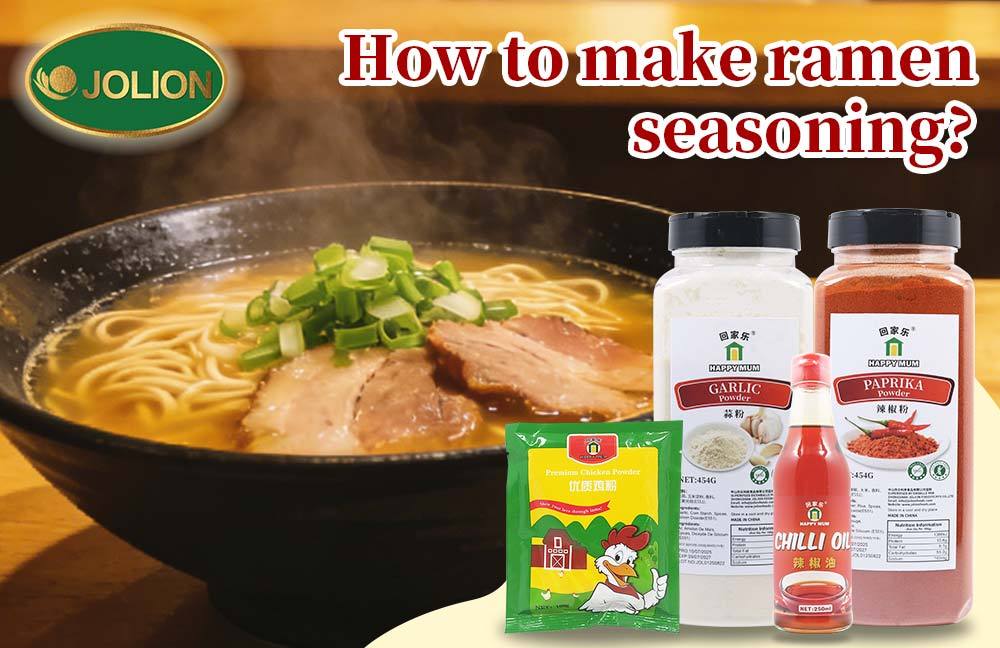
When discussing how to make ramen seasoning, we usually start with a simple combination of base components such as soy sauce, salt, sugar, and aromatic elements like garlic or ginger. These ingredients are combined in controlled proportions to create a balanced seasoning base. In our experience at JOLION Foods, the goal is not to overwhelm the palate but to support the noodle texture and broth clarity. A typical preparation begins by gently heating the liquid base, dissolving the solids, and allowing the mixture to rest so the flavors integrate evenly. This step generally takes a short preparation time, followed by a brief resting period to stabilize the profile before use in soups or stir-based dishes.
Cooking steps and noodle pairing
Continuing with how to make ramen seasoning, the next stage involves pairing the seasoning with noodles and adjusting dilution according to the serving style. For example, ramen broth requires a higher concentration compared to dipping sauces used with udon or soba. At JOLION Foods, we often note that texture and absorption vary depending on noodle type, which is why consistency in seasoning concentration matters. Products such as 400g wet udon noodles and Happy Mum Brand Udon Noodles are commonly used in this context. These noodles are made from refined wheat flour and are suitable for soup-based dishes, stir-fried applications, and salad-style servings. Whether preparing ramen, udon, or soba, the seasoning base should complement the noodle structure without overpowering it. The cooking process typically involves boiling the noodles separately, preparing the seasoning base in parallel, and combining them just before serving to preserve texture and flavor clarity.
Conclusion
How to make ramen seasoning is less about complexity and more about maintaining balance, repeatability, and compatibility with different noodle types. At JOLION Foods, we apply this principle across our seasoning solutions to support consistent outcomes for food service operators and distributors. Our experience working with ingredients and noodle pairings allows us to provide practical guidance that fits real production needs. For businesses exploring bulk supply or customized seasoning support, JOLION Foods offers B2B services that align with sourcing, export, and product development requirements, helping partners integrate seasoning systems into their own product lines in a structured and reliable way. We also maintain communication with partners during sampling and adjustment phases to ensure practical alignment with their application scenarios and operational workflows while respecting their internal constraints.
Related News
- Aug 06, 2026Low Sodium Soy Sauce: Is It Actually Healthier, and How Does It Compare to Light Soy Sauce?
- Aug 06, 2026Is MSG Bad for You? The Science-Backed Truth About Monosodium Glutamate Side Effects
- Jun 01, 2026How Long Does Canned Pineapple Last: A Complete Guide
- Jun 01, 2026How Long Does Canned Fruit Last? A Complete Guide
- May 20, 2026Choosing a Trusted Japan Wasabi Sauce Manufacturer in China for Authentic Flavor
- May 19, 2026Why Our Supply Chain Trusts This Gluten Free Soy Sauce Manufacturer in China
Start Your Seasoning Sauce Business by a Free Quote
GET FREE QUOTES
If you are interested in our services, let's have a try on the first project