- Understanding Tomato Sauce Production with Practical Insights from JOLION Foods20/04/2026At JOLION Foods, we often receive questions about who is a manufacturer of tomato sauce from buyers seeking reliable condiment sources for their projects.
- Practical Guide to Preparing Ramen Seasoning for Consistent Flavor Development19/04/2026In our daily work at JOLION Foods, we focus on helping food businesses understand practical seasoning preparation while maintaining consistency in flavor.
- Understanding does seasoning have calories in Practical Cooking with JOLION Foods18/04/2026At JOLION Foods, we often address questions from our partners regarding ingredient composition and everyday cooking decisions.
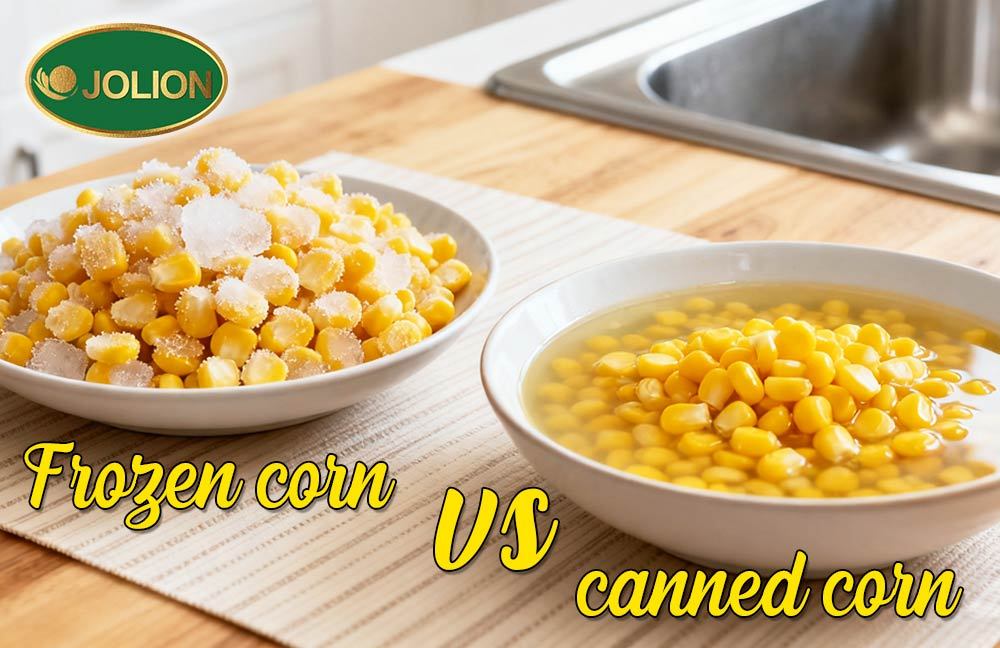
Canned vs. Frozen Corn: Which Is Better for Your Kitchen
Thousands of years ago, corn spread worldwide and provided a sustainable, complete diet, becoming the cornerstone of many civilisations. Nowadays, corn underpins the modern industrial food system, because of its sweet flavor and versatility in countless dishes, such as soup, salad, snacks.
However, many home cooks wonder whether to choose frozen or canned corn. As a sauce manufacturer, Jolion Foods provides the details you need on frozen and canned corn, helping you choose the perfect type to elevate your dishes.
What is frozen corn?
Canned corn is a convenient food containing cooked kernels and some liquor. Here is producing detail:
Once the sweet corn is harvested at its peak of freshness, it will be transported to the processing plant. In there, it is promptly husked, cleaned. Next, the cutting machine precisely cuts the whole kernels from the cob. Then, these kernels are boiled or steamed to stop enzyme activity that would otherwise cause loss of flavor, color, and texture. Last, they are dispensed into cans and sealed with an airtight lid. At this step, some manufacturers add a small amount of burden, like water, sugar, and salt. In addition, these sealed cans are placed in large, industrial pressure cookers and heated again to destroy bacteria.
What is frozen corn?
The first few steps are the same as canned corn. But next, they are dealt with in different ways:
After the sweet corn is harvested at its peak of freshness, it will be transported to the processing plant. In there, it is promptly husked, cleaned. Next, the cutting machine precisely cuts the whole kernels from the cob. Then, kernels are boiled or steamed. Last, they are sent to a freezer, where they can be frozen in minutes.
The differences between frozen corn and canned corn
Besides the different producing process, here are main differences you may concern about:
In fact, frozen and canned corn have similar calorie and carb counts, making them a nutritious option. Canned corn has high sodium, while frozen corn retains vitamins and minerals.
Canned corn is known for its sweet, tender kernels, offering a convenient option that’s ready to eat straight from the can. It’s perfect for quick recipes or as a side dish. Frozen corn, however, often retains a firmer texture and a fresher taste.
They are both ready-to-cook. But if you need something ready to go with no preparation, canned corn may be the better choice.
Which is better for you?
Frozen corn and canned corn both bring unique benefits to your kitchen. In general, you can interchange them with any dishes, which means you can make delicious meals regardless of which type you have on hand.
At JOLION Foods, we are committed to providing high-quality canned corn that meets various dietary certifications, including HACCP, BRC, IFS, HALAL, KOSHER, and ISO. Our products are designed to enhance your meals and simplify your cooking process. In addition to our excellent B2B services, JOLION Foods helps companies improve the quality of our gourmet products. When you work with us, you'll have access to premium ingredients that will allow you to make recipes that your clients will adore. We guarantee you will get the highest-quality corn, whether you use canned or frozen corn, to satisfy your culinary needs. When planning your next culinary excursion, choose JOLION Foods!
Related News
- 20/04/2026Understanding Tomato Sauce Production with Practical Insights from JOLION Foods
- 19/04/2026Practical Guide to Preparing Ramen Seasoning for Consistent Flavor Development
- 18/04/2026Understanding does seasoning have calories in Practical Cooking with JOLION Foods
- 17/04/2026Can Cats Eat Food with Seasoning? Cooking Insights from JOLION Foods and Practical Use of Superior Light Soy Sauce
- 16/04/2026Using JOLION Foods and Understanding is seasoning a food in Practical Cooking
- 15/04/2026Cooking with Soy-Based Seasoning: A Practical Guide from JOLION Foods for Everyday Recipes
Start Your Seasoning Sauce Business by a Free Quote
GET FREE QUOTES
If you are interested in our services, let's have a try on the first project